Vicky Lee
Education, Human-Technology Collaboration Concentration, Ph.D. (2024 George Washington University)
Adult Education, M.S. (2021 Buffalo State University) - Micro-credentials in Online Teaching and Instructional Design
Teaching & Learning in Postsecondary Education, Graduate Certificate (2021 Michigan State University)
Higher Education Administration, M.Ed. (2018 Vanderbilt University)
Human Development & Family Studies, B.A. (2016 Michigan State University)
Employment: PhD student and Graduate Research Assistant, Graduate School of Education and Human Development, George Washington University
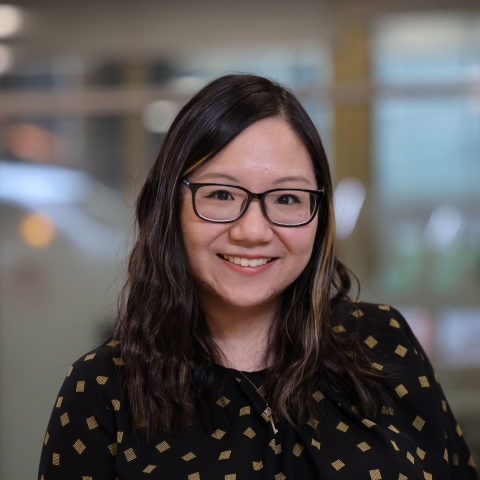
Vicky Lee is an Adult Education graduate pursuing a doctoral degree full-time while actively participating in the human-technology collaboration lab at George Washington University’s Graduate School of Education and Human Development. Her research interests focus on educational technology, online education, and adult learning, particularly the responsible use of AI in education for adult learners and strategies for online student engagement.
Vicky hopes to secure a role where she can leverage her research background, student affairs experience, interest in adult learning, and knowledge in education technology in higher education as a scholar-practitioner.
As an international, first-generation student, she credits her family as her greatest greatest motivation. “I would not be able to further my studies without the support of my family. Pursuing a degree while working full-time was certainly challenging, but their continuous support and encouragement have been my motivation to persist.”
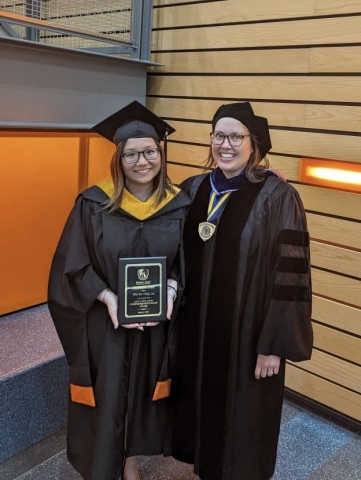
Vicky is the recipient of the Buffalo State University Spring 2024 Adult Education Comprehensive Examination Award.
In the following interview, Vicky shares her experience in the Adult Education program and the valuable support and expertise she encountered in the fully online program's faculty, staff, and student peers.
Why did you choose Buffalo State?
Choosing Buffalo State and pursuing another master’s degree was a happenstance—it wasn’t exactly planned! I was working at the University at Buffalo having just completed my graduate certificate in teaching and learning in postsecondary education at Michigan State. I knew down the road I wanted to pursue a Ph.D. but was having “commitment issues” to what topics and issues I would research. I came across Buffalo State’s M.S. Adult Education program, scheduled a call with Dr. Andrea Nikischer, and immediately believed this program would be a great fit for me to grow as a practitioner. The Buffalo State experience was drastically different from the ones I had on other campuses, and I was genuinely surprised by how skilled each faculty member was at teaching online and engaging with students digitally. I truly appreciate the high touch approaches that faculty members and lecturers have taken, challenging all of us as students to learn and grow as a collective.
Why did you choose your career path?
I have always known that I am drawn to helping professions, but I never really knew how to position myself in society. I found my interest and passion through on-campus student employment as an undergraduate and have since then pursued a career in higher education/student affairs. As my responsibilities continued to evolve during my tenure in higher education/student affairs, I recognized that I could upskill in how to meaningfully engage with traditionally aged college students and adult learners, which led me to pursue a slight career pivot to further my education in adult education while still working full-time. I really enjoy working with other people and making a difference in each student’s life, whether big or small. Many people think that being an educator is solely about teaching in a classroom. My lived experience as a practitioner and my passion for adult learning have challenged me to redefine education as a field of practice.
How has Buffalo State helped prepare you, personally and academically?
I really enjoyed the small class size at Buff State, where I truly got to know my peers in class throughout the semester (or even multiple semesters!). The curriculum of Adult Education challenged us to apply knowledge and theory to practice, and many of our coursework throughout the program were strategically designed to reinforce our understanding of key concepts through scaffolding. While all the courses I have taken were asynchronous, faculty members and lecturers are skilled to teach virtually in online settings and remained accessible and approachable, demonstrating genuine care through their teaching and mentorship.
What course(s) did you find especially meaningful?
I particularly found both of our instructional design courses (ADE 608 and ADE 610) meaningful. As a higher education/student affairs professional without prior formal training in teaching and pedagogy, these courses challenged me to rethink how instructional design concepts can be applied to program development and assessment in higher education/student affairs contexts. What can I do to ensure students learn and grow through the programs, initiatives, and events I organize as a student affairs practitioner? Learning does not solely happen in classrooms and formal learning settings, and these courses provided me with the foundation to be more intentional in my day-to-day work as a higher education/student affairs professional. It was also because of those classes that I found my research interests in educational technology and teaching pedagogy among adult learners, which led to where I am now.
Did anyone inspire you while you were a student at Buffalo State?
Credit must be given to the entire department of Adult Education. I would not have had such a wonderful experience in the program without the faculty members, lecturers, and students who intentionally curated and cultivated a collaborative learning environment that enabled me to grow as a student, practitioner, and scholar. It was Dr. Angela Thering who first challenged me to consider doctoral studies when I was a student in her class, followed by Dr. Dennis Mike doing the exact same in a subsequent semester. I reached out to Dr. Andrea Nikischer, my advisor, for further guidance, only to receive encouragement and validation with a similar sentiment. Without their mentorship, motivation, and guidance, I probably would not have had the courage and confidence to take a leap of faith and apply to Ph.D. programs. They allowed me to stand on their shoulders to maximize my potential through my continuous studies in the field, and I am immensely grateful for their constant support.
What are some highlights of your Buffalo State experience?
Visiting the Buffalo State campus for the first time for commencement was certainly a highlight! I got to meet many of my peers in person for the first time (they are all real people, not only my online BFFs!) and receive my award plaque (it makes it all the more official) and get hooded by faculty members on stage. Although this is the 3rd commencement I have actively participated in, it feels the most special—the sense of community and belonging was like no other, let alone the fact that I am still in touch with many of my peers and faculty members after graduation!
What does it take to succeed in your field or in general?
Hands-on experience, transferable skills, and exposure to functional areas you are interested in exploring are essential to success in student affairs. The field is often dynamic and requires a lot of intentionality, resourcefulness, and collaboration, especially when resources are scarce. Oftentimes, it also requires you to be innovative, coming up with new ways to solve problems. Seeking support not only from supervisors and seasoned colleagues but also from peers of similar age and/or experience goes a long way. Be intentional about meeting new people and learning from their experiences. Finally, resilience is perhaps one of the most important attributes for all educators at all academic levels.
What is your teaching philosophy?
Since my experiences are primarily outside of the context of teaching, I prefer to call mine the student affairs philosophy—to serve as a valuable resource by providing the most relevant, up-to-date information to students, such that students can be empowered to make informed decisions for themselves that promote student development, self-efficacy, and autonomy. Such an approach requires me not only to serve as a connector but also to act as an advocate, especially when new resources may be needed to meet the varying needs of a diverse student population.
What advice might you give to students beginning an education program at Buffalo State?
Faculty members here at Buffalo State are one of your most significant resources! They will push and challenge us to become better versions of ourselves and grow professionally throughout our studies, such that we could be competent educators capable of applying the knowledge we learnt in school to classrooms and beyond.
A few observations and thoughts:
- Adult education is (and should be) getting more attention than ever, primarily because of the increasing number of adult learners returning to school in an official capacity, and the importance of upskilling throughout one’s career.
- Online teaching and learning must be approached with intentionality. While COVID-19 forced most of the world to pivot to emergency online teaching and learning, many teachers and learners were never prepared for such an experience. Now that we are out of “emergency” mode, educators need to plan meaningful, strategic online student engagement and instruction.
- With the rise in credentialing outside of formal schooling, what are the things that educators must do to justify the value of a college and/or graduate degree (or any academic credentials issued by formal education institutions)?
- The rise of Artificial Intelligence is continuously transforming the world, and educators must take a proactive approach to ensure that students are competent at navigating the world with AI (because AI is not going away!). Critical thinking skills, coupled with digital, AI, and data literacy, must be cultivated through intentional instructional and curriculum design that involves AI.
posted August 11, 2026